
Medical stents, frames, and tubes are cylindrical objects by design. However, it is a standard industry practice to utilize 2D measurement techniques to inspect them. 2D measurement of a 3D object often leads to data not being reliable or complete. To solve this challenge, we deploy high precision 3D measurement devices and 360 degree scanning stages. By doing this we are able to produce a full 3D surface map of the medical device that needs to be inspected. The 3D nature of this data allows us to make more accurate measurements and inspect parts of the tube that were previously unavailable using 2D technologies.
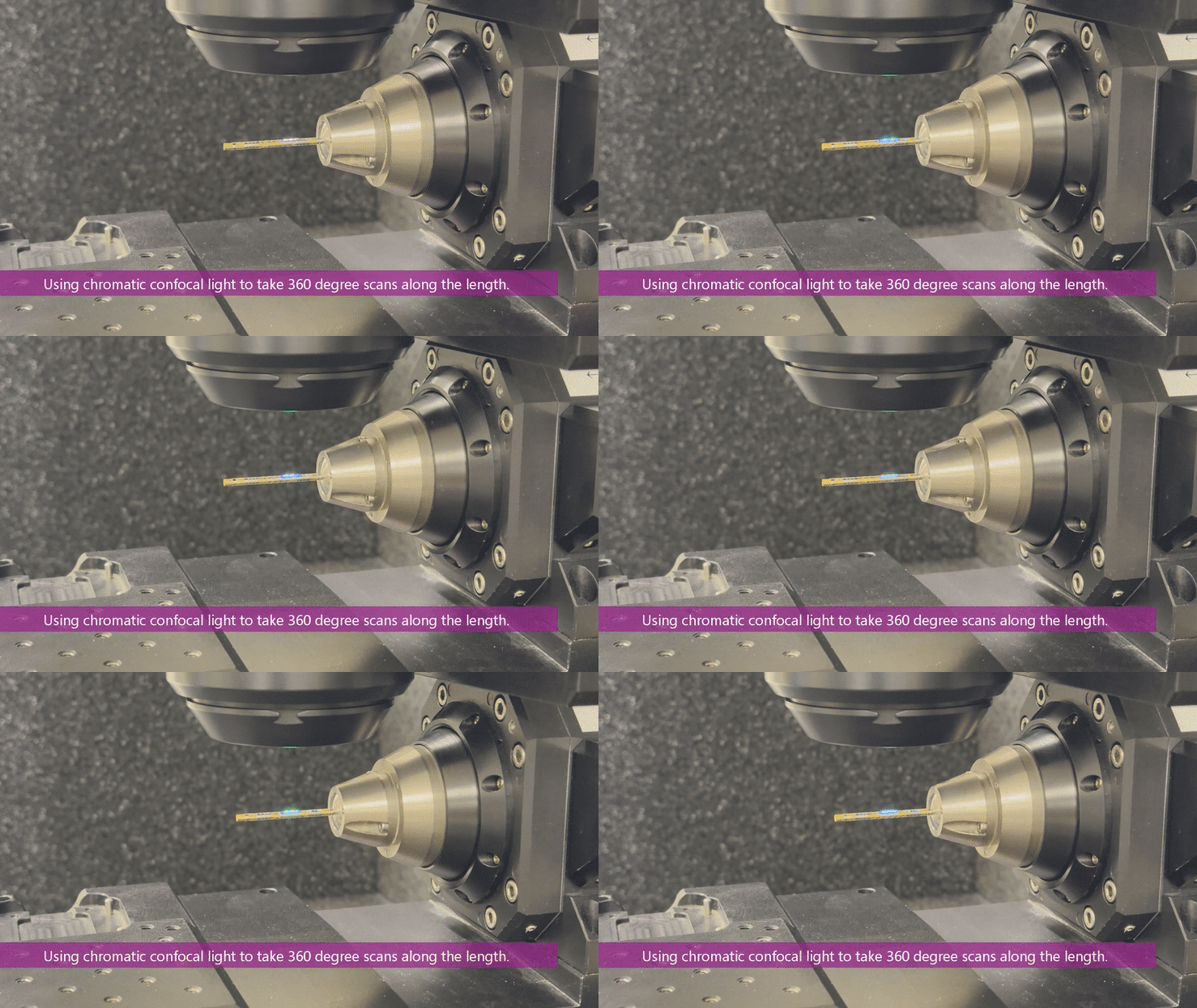
Showing a stent being inspected on a tubular measurement system. The system is composed of precision rotary and linear motorized position stages plus a chromatic confocal line scan sensor. This combined solution is capable of producing high resolution 3D datasets.
What does the Data look like?
The tubes are scanned using a 360 degree motorized rotary stage. As the stage rotates a sensor that produces a line of data is triggered based on the tube’s circumferential position. Once 360 degrees of the tube has been scanned we index to the next unscanned surface of the tube using a linear axis. Each round scan is then stitched together along the length of the tube to provide a single data set. All of the stages are fully aligned to the sensor in multiple degrees of freedom. Also, the motorized positioning stages use precision encoder feedback and calibration methods. The combination of all of this enables an extremely accurate recreation of the tube’s surface as a 3D data set.


Showing the ~35millimeter long stent itself (above). Also showing a 3D map of the stent after measurement and data stitching. The 3D dataset is the full surface area of the stent in an unraveled view.

Showing a zoomed in section of the data reveals the large quantity of surface data points. Each one of these data points comes back from the sensor based on true position of the part in 3D space.
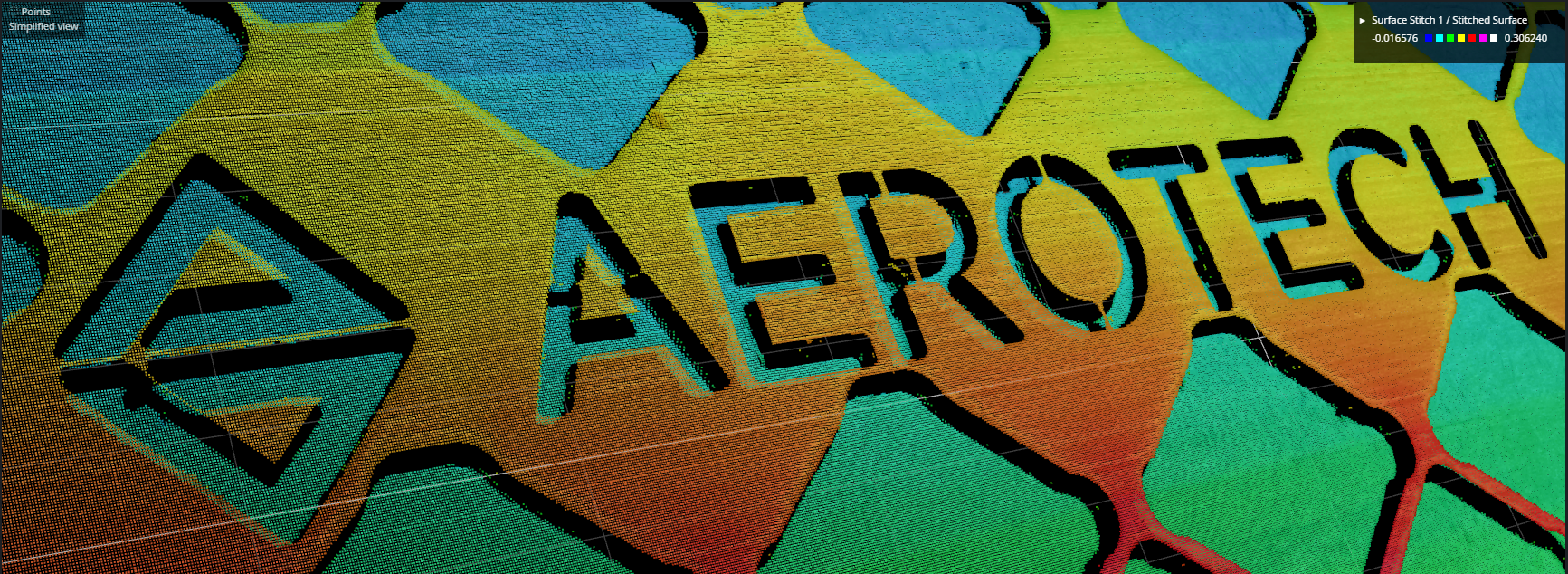
Showing the surface data of the stent (orange and red) and the mandrel that it is being held with (blue and green). If desired, a height filter is applied to remove the mandrel from the data set. This exposed only the stent’s surface.
See the data Collection Process in Action
conclusion
The inspection of stents and other medical tubes can be difficult to perform correctly using 2D measurement equipment. Using 3D technologies allows for the tube to be more accurately measured with greater reproducibility in the measurement process. Some of the main advantages include:
- Measure and inspect stent features accurately down to the micron. Including surface and edge height characteristics.
- Automate the measurement so that it is not operator intensive.
- Remove operator variance from measurement results that are collected by multiple different operators.
To learn more about the equipment we build please visit our sensor scanning product page.
For more guidance and consultation please reach out to us. We offer full engineering and laboratory testing services to help guide our customers towards the right solution to their measurement challenge.